1. Working principle of planetary gearboxes
The working principle of planetary gearboxes is based on the rotation and revolution of planetary gears. When power is input through the input shaft, the planetary gears rotate and revolve under the drive of the sun gear, and transmit the power to the output shaft through meshing with the ring gear and the sun gear. Due to the different number, gear ratio and meshing method of the planetary gears, a variety of transmission ratios and speed change functions can be achieved.
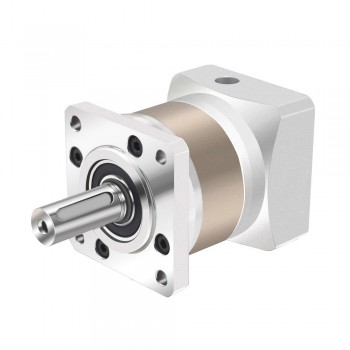
2. Structural composition of planetary gearboxes
1. Planet carrier: The planet carrier is one of the core components of the planetary gearbox, which supports and allows the planetary gears to revolve on it. The planetary gears are mounted on the planet carrier through bearings and rotate with the planet carrier.
2. Planetary gears: The planetary gears are mounted on the planet carrier. In addition to rotating around their own axis, they will also revolve around the axis of other gears with the planet carrier. This combination of rotation and revolution enables the planetary gearbox to achieve complex transmission ratios and speed change functions.
3. Sun gear: The sun gear is a gear fixed to the shaft, usually used as a driving or driven central gear. The planetary gears revolve around the sun gear and transmit power through meshing.
4. Ring gear: The ring gear is a fixed external gear that usually meshes with the planetary gears to support and transmit power. The fixing of the ring gear allows the planetary gears to revolve around the sun gear.
5. Input shaft and output shaft: The input shaft is connected to the drive source, and the output shaft is connected to the load. By controlling the speed and direction of the input and output shafts, different transmission ratios and functions can be achieved.
3. Main advantages of planetary gearboxes
1. High transmission ratio and torque amplification: The planetary gearbox can achieve a high transmission ratio through a sophisticated gear design, which greatly reduces the rotation speed and significantly increases the torque output. This design makes the planetary gearbox perform well in applications that require large torque output. In addition, the planetary gear mechanism has the characteristics of torque amplification, which can increase the torque of the input shaft, thereby providing greater torque output.
2. Smooth output characteristics: The design of the planetary gearbox makes the output speed more stable, effectively reducing vibration and shock. Its structural design is ingenious. Through the synergy of multiple gears, the torque transmission capacity is greatly improved, making the output torque fluctuation smaller.
3. Compact design and lightweight physical properties: The planetary gearbox adopts a concentric arrangement to achieve an inherent compact design. This design not only saves installation space, but also facilitates integration with other components, and is particularly suitable for use in installation environments with limited space. In addition, its simple structure also makes the planetary gearbox have an advantage in weight, which is suitable for applications with weight requirements.
4. High efficiency and long life: Since there are multiple planetary gears in the structure of the planetary gearbox, the output can be well shared, so the output torque is stable, the friction and wear are small, and the life is long. Its structure is simple and compact, and the intermediate shaft and intermediate gear are eliminated. There is no need to slide the gear when shifting, which further reduces the friction loss.
5. Versatility and adaptability: The planetary gearbox can achieve a variety of transmission ratios through different fixing methods (such as outer ring fixing, sun gear fixing, etc.), which is suitable for different transmission needs. For example, when the outer ring gear is fixed, the transmission ratio ranges from 3:1 to 12:1; when the sun gear is fixed, the transmission ratio ranges from 1.1:1 to 1.7:1. This flexibility allows planetary gearboxes to perform well in a variety of applications.
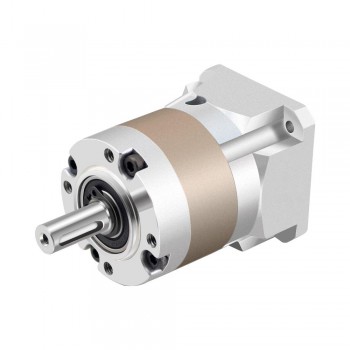
4. Common applications of planetary gearboxes
1. Aircraft engines: Planetary gearboxes are widely used in aircraft engines. Due to their small size, compact structure and high transmission efficiency, they can meet the requirements of high efficiency and durability in the aviation field.
2. Lifting equipment: Planetary gearboxes are also important in lifting equipment. They can provide high torque density and operating efficiency, and are suitable for occasions requiring large torque output.
3. Smart home: Planetary gearboxes are also widely used in the field of smart homes, such as automatic curtains, smart toilets and other equipment, which can provide precise transmission control.
4. Production automation: In the field of production automation, planetary gearboxes are used in various automation devices to provide stable transmission effects and efficient energy conversion.
5. Transportation: In the field of transportation, planetary gearboxes are used in vehicle gearboxes and can provide a variety of transmission ratio options to meet different driving needs.
6. Wind power generation: Planetary gearboxes are widely used in wind turbines and can withstand high loads and long-term operation. They are suitable for the transmission system of wind power generation equipment.
7. Pumps and compressors: In industrial equipment such as pumps and compressors, planetary gearboxes can provide stable transmission and efficient energy conversion, and are suitable for industrial applications that require high reliability.
Source:https://stepper718.muragon.com/entry/16.html |